How I Compost in Winter (Even in Snowy Wisconsin!)
Living in Wisconsin means our gardens spend months buried under snow—but that doesn’t stop me from composting! Even during the coldest, snowiest winter months, I continue composting kitchen scraps, chicken bedding, and rabbit litter right outside in my yard.
It’s simple, natural, zero-waste, and sets my garden up for an incredibly nutrient-rich spring.
Over the years, I’ve learned to just work with the snow instead of fighting it—and my garden has honestly never been happier.
In this post, I’m sharing exactly how I compost in winter, what I do with all of my vegetable and fruit scraps, and how I use chicken and rabbit manure to build healthy, fertile garden beds—all while everything is frozen solid and covered in snow.
This post may contain affiliate links, which means I’ll receive a commission if you purchase through my link, at no extra cost to you. Please read full disclosure here.

RELATED POST: How I Compost Fall Leaves in the Fall — a perfect companion to winter composting!
Why Composting in Winter Works (Even in Freezing Temperatures)
Many people assume composting must stop in winter because the pile freezes.
But here’s the secret:
Composting doesn’t stop—it just pauses.
Everything you add during the winter months will break down beautifully once spring warmth returns!
Even in snowy weather, you can:
- Add kitchen scraps
- Add coop and hutch bedding
- Build nutrient layers for spring
- Reduce food waste all winter long
And you don’t need anything fancy. I use:
- A wooden outdoor compost bin
- My raised garden beds
- Buckets for carrying bedding and scraps
That’s it!

The Empress of Dirt also recommends winter composting and shares even more benefits and ideas if you want to keep reading.
Winter Composting Method #1: Adding Kitchen Scraps Right on Top of the Snow
What Kitchen Scraps I Compost in Winter
All of my everyday food scraps go straight into the compost bin—even in January and February. This includes:
- Fruit scraps
- Vegetable peels
- Coffee grounds
- Eggshells
- Herb stems
- Leftover produce
If it’s natural and plant-based, it goes in the winter pile.

BONUS: How I use eggshells to boost my tomatoes
How I Add Food Scraps to the Compost During Winter
Even when my compost is frozen solid, I simply open my wooden bin and place the scraps right on top of the snow.
There is no turning… no mixing… nothing special.
I just keep adding to it week after week.
Once the spring temperatures warm up:
- The snow melts
- The scraps drop into the pile
- Decomposition restarts
- The composting process takes off on its own
This “set it and forget it” winter method works beautifully every year.

A Bonus Winter Treat: Feeding the Squirrels
An unexpected perk?
All winter long, the squirrels dig through my compost bin looking for treats—especially when they’re out scavenging for the walnuts from our yard. They help stir things up naturally, and it’s fun to watch them explore the snow-covered pile!
Winter Composting Method #2: Adding Chicken Poop & Bedding to My Garden Beds
Why Chicken Manure Is So Good for Winter Composting
Chicken manure is:
- High in nitrogen
- Full of beneficial microbes
- A natural soil builder
- Fantastic for spring garden growth
Because it’s a “hot” manure, it normally needs to sit and compost before planting—but winter solves that for you!

Where I Put My Chicken Bedding in Winter
When I clean out my chicken coop, I simply:
- Scoop out the used bedding
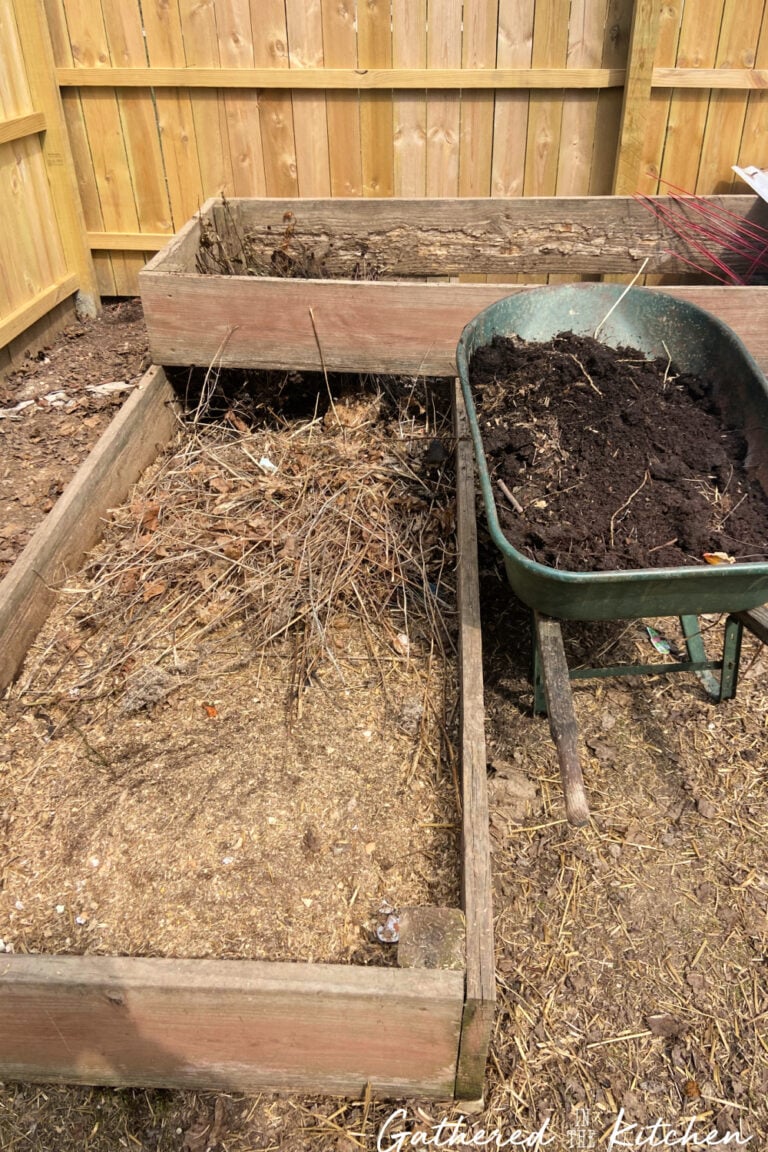
- Dump it right on top of my raised garden beds—the same beds where I grow all my tomatoes
- Let the snow cover it naturally
Layering chicken litter on top of the snow gives it months to break down slowly.
By spring, it has transformed the soil into a fluffy, nutrient-rich base for planting.

Read more about how I care for my chickens during Wisconsin winters
Winter Composting Method #3: Adding Rabbit Poop & Bedding to the Garden
Why Rabbit Manure Is a Winter Gardening Superpower
Rabbit manure is one of the best fertilizers you can add to a garden because it’s:
- Cold manure (safe to add directly to soil)
- High in nitrogen
- Full of organic matter
- Pelletized—perfect for slow release
Because my rabbits burrow and insulate heavily in winter, I end up with a lot of litter to clean out of their insulated and heated hutch.

How I Use Rabbit Bedding in Winter
My winter routine is simple:
- Shovel out the rabbit bedding
- Carry it to the garden
- Dump it right on top of the raised beds—yes, right on top of the snow
- Leave it until spring
All winter long, it sits, freezes, thaws, and starts to break down naturally.
Come spring, the soil underneath is dark, rich, and full of nutrients.

Why Chicken + Rabbit Manure Together Make the Ultimate Winter Fertilizer
When mixed together in garden beds, chicken manure + rabbit manure create a powerhouse fertilizer blend. The combination is packed with:
- Nitrogen for leafy growth
- Organic matter that improves soil structure
- Beneficial microbes that jump-start decomposition
- Trace minerals plants rely on all season long
The chicken manure provides a strong nitrogen boost, while the rabbit manure offers a gentler, slow-release nutrient source.
By the time the spring thaw arrives, the raised beds are naturally enriched—no fertilizer bags required.

The Bedding I Use for My Chickens and Rabbits (And Why Pine Shavings Compost Beautifully)
For both my chickens and rabbits, I use pine wood shavings as the main bedding material all winter long. Pine is incredibly absorbent, helps control odor, and creates a clean, dry surface in both the coop and the rabbit hutch—even during the coldest months.

One of the biggest perks is that pine shavings compost amazingly well! When mixed with manure, they create a perfect balance of nutrients. Chicken manure is naturally high in nitrogen, while rabbit manure is a gentle “cold” fertilizer that’s safe to add directly to the garden.
The pine shavings themselves act as an essential carbon source (“brown material”), helping balance all that nitrogen and creating ideal composting conditions.
Even when I dump the used bedding directly onto my snow-covered raised garden beds, the pine begins to break down slowly throughout the winter. As temperatures warm up, the snow melts, and the freeze–thaw cycles begin, the pine, manure, and straw start transforming on their own.
By spring, natural microbes take over and continue the breakdown process, leaving me with rich, nutrient-dense soil that’s ready for planting.
BONUS: Grab my quick + easy raised bed plans

Winter Composting in Snowy Wisconsin
Even in snowy Wisconsin winters, composting is not only possible—it’s incredibly rewarding. By layering kitchen scraps, chicken bedding, and rabbit bedding all winter long, you build the foundation for rich, healthy soil that your spring garden will absolutely thrive in.
If you’re new to winter composting, remember:
- Don’t overthink it
- Add your scraps and bedding all season long
- Let nature do the work
- Enjoy the payoff when gardening season arrives
Your future tomatoes will thank you!


Stephanie—home cook, DIY addict, seasonal decor fanatic, and proud chicken wrangler living in a Victorian house that’s always a project. Whether I’m cooking with garden-fresh ingredients, herding mischievous chickens, or tackling another DIY, I’m here to share the fun (and chaos).