
How to Compost Fall Leaves for Healthy Soil (Simple Beginner’s Guide)
Every fall, our yard turns into a sea of leaves. When we moved into our 1886 Victorian home in the spring, the yard was still buried under inches of leaves left from the previous fall… I’m not even joking, there were SOOO many leaves! The beautiful oak and maple trees that have shaded our home for generations had dropped a blanket of yellow and red across the entire yard.

At first, I wasn’t sure what to do with them all – bag them up, burn them, or try to compost them? After a little research (and a lot of persuading from my husband that the leaves were actually good for our yard), I decided to start composting them… and it turned out to be one of the best garden decisions I’ve made!
In this post, I’ll share what the best way to compost all of your fall leaves is so you can turn that annual cleanup into rich, healthy soil for your garden.
Why Composting Your Leaves is Important
If you’ve ever raked leaves for hours only to see bags of them lining the curb, you know how much time and effort it takes to clean up all those autumn leaves. But here’s the thing – those leaves aren’t waste at all. They’re packed with nutrients that your garden soil craves!
This post may contain affiliate links, which means I’ll receive a commission if you purchase through my link, at no extra cost to you. Please read full disclosure here.
According to the Pennsylvania Horticulture Society, when leaves decompose, they break down into rich organic matter that improves your soil’s texture, helps it retain moisture, and gives plants the nutrients they need to thrive. Composting your fall leaves also cuts down on yard waste, saves money on store-bought fertilizer, and keeps your garden ecosystem healthy and natural.

Composting for Beginners: Turning Fall Leaves into Healthy Soil
Compost Bin
Before my husband and I tackled all of those fallen leaves, we knew we needed a place to put them! With such a big yard (and even bigger piles of autumn leaves), we wanted something sturdy, simple, and big enough to hold everything through the winter.
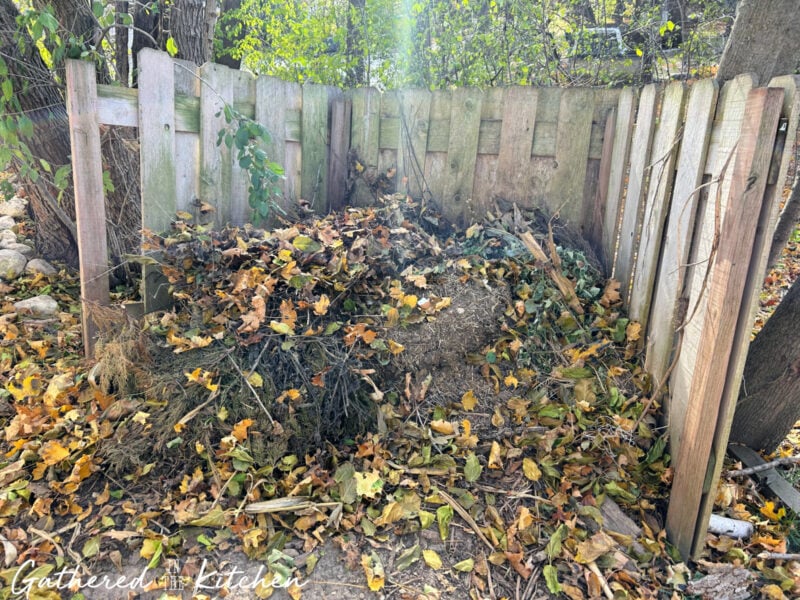
So we made a quick trip to Home Depot, grabbed three wooden fence panel sections and a couple of 2x4s, and built our own DIY compost bin. It’s nothing fancy… just a three-sided wooden enclosure, but it works perfectly for holding all of our fall leaves, grass clippings, and other compostable kitchen scraps throughout the year.
This type of DIY compost bin is ideal for beginners because:
- It’s inexpensive to build
- It allows plenty of airflow (which helps everything break down faster)
- It’s large enough to handle big piles of fall leaves
- It blends right into a backyard or wooded area
In the photo below, you can see how our compost bin looks once we’ve added our layers of fall leaves, garden cuttings, and other organic material. Over time, everything slowly breaks down into rich, dark compost — the best soil amendment for raised beds and garden rows.
How To Compost Your Leaves
Once you have your compost bin or containment system in place, it’s time to start filling it!
While you certainly can just fill it with all of your fallen leaves, here are a few tips to ensure your leaves breakdown over the winter months and turn to rich, healthy compost to refill your garden beds come spring.
1. Fill It
I start by filling our compost bin with whatever we have on hand—lots of fall leaves, clippings from all my garden beds during fall clean-up (I also follow these simple ways to winterize your lawn in the Midwest), and even our chicken and rabbit waste with the pine litter. Then, from the kitchen, I toss in coffee grounds and vegetable scraps. It all goes right into the bin! I keep adding to it all throughout the year!
*Pro Tip: I don’t add weeds that have gone to seed, diseased plants, or anything sprayed with chemicals. Everything else from the yard and kitchen usually goes right in!
2. Rotate It
About once a month, I head out there with a shovel and give everything a good stir. I mix up the leaves, plant trimmings, litter, and kitchen scraps. Turning it helps air get in, which speeds up the breakdown process and keeps everything moving along.
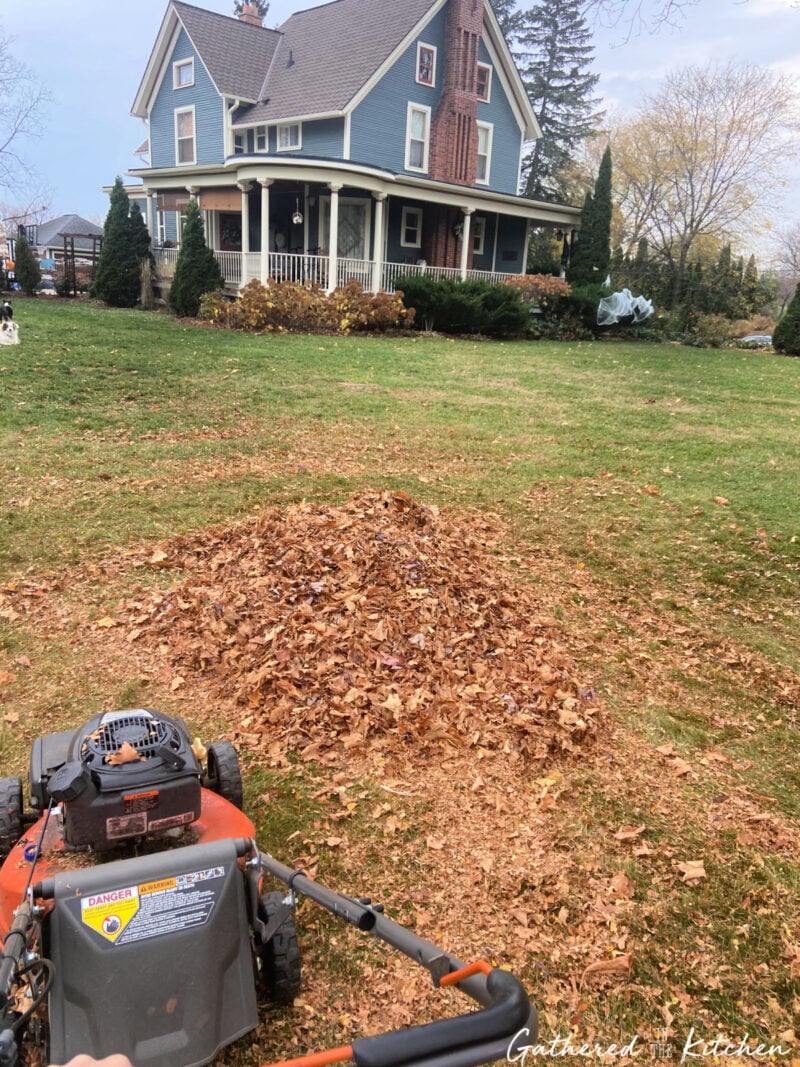
*Bonus Tip: If you run your leaves over with a lawn mower first, they break down even faster — but don’t worry if you skip this step, I often do!
3. Let Nature Do Its Thing
Between stirrings, I just leave it alone. Nature does the rest! Over time, all those layers break down and turn into the most amazing, rich soil—perfect for filling and refreshing my garden beds in the spring.

Composting Leaves Right Into Your Yard (Mulching Method)
If you don’t want to deal with a compost bin, you can still “compost” your fall leaves right on your lawn! One of the easiest ways to break them down is by simply running them over with your lawn mower.
If you have a mulching kit on your mower, this is the easiest way to mulch your leaves right on top of your lawn. If not, no worries—just raise your mower blades to the highest setting and mow like normal. The key is to chop the leaves into small pieces so they can filter down into the grass and decompose over time. Within a few weeks, they’ll start breaking down and enriching the soil all on their own.
It’s fast, easy, and completely eliminates the need to bag leaves or haul them to the compost bin.
Pro Tip: Try to mow when the leaves are dry—they shred more evenly and won’t clog the mower.

Composting fall leaves has been such a simple, rewarding way to take care of our yard naturally — and it’s amazing to see how much rich soil you can create just by letting nature do its thing.
Give it a try this fall — your garden will thank you in the spring!


Stephanie—home cook, DIY addict, seasonal decor fanatic, and proud chicken wrangler living in a Victorian house that’s always a project. Whether I’m cooking with garden-fresh ingredients, herding mischievous chickens, or tackling another DIY, I’m here to share the fun (and chaos).


