Food Safety Basics Every Home Cook Should Know
Food safety is one of the most important skills I teach—whether I’m sharing a cozy chicken pot pie, prepping veggies from the garden, or walking you through a slow-cooker recipe. These same principles are taught in Family & Consumer Sciences (FCS) classrooms and Culinary CTE programs, and they help keep your kitchen healthy and safe.
If you’re interested in how I break down recipes step-by-step to make cooking easier and more approachable, you might enjoy this post: How Step-By-Step Cooking Helps You Become a More Confident Home Cook.
Here are the basic food safety habits I rely on in my own kitchen and naturally weave into many of my recipes.
Proper Handling of Raw Meat
These small steps prevent bacteria from spreading and help keep your kitchen safe.
This post may contain affiliate links, which means I’ll receive a commission if you purchase through my link, at no extra cost to you. Please read full disclosure here.
- Keep raw poultry, beef, and pork separate from produce
- Wash cutting boards with hot, soapy water after each use and keep them conditioned with food-safe oil to maintain cleanliness and prevent bacteria buildup
- Wash hands before/after handling meat
- Never rinse raw chicken (it spreads bacteria!)
Safe Internal Cooking Temperatures
To ensure meats are fully and safely cooked, use a thermometer — it takes out the guesswork and ensures your food is done perfectly.
- Chicken & turkey: 165°F
- Ground meats: 160°F
- Beef, pork & fish: 145°F + 3-minute rest
Use a food thermometer — it’s the #1 tool recommended by ServSafe!
⭐ Check out this recipe: Grass-fed Ground Beef Meatloaf Recipe
Cross-Contamination Prevention
Simple habits like keeping foods and tools separate help prevent bacteria from spreading.
- Keep knives and cutting surfaces clean
- Don’t reuse marinades
- Use clean plates for cooked foods
Storage & Leftover Guidelines
These easy storage habits help keep your leftovers fresh and safe for later.
- Refrigerate leftovers within 2 hours
- Store cooked meals in shallow containers
- Use leftovers within 3–4 days
- Freeze cooked meats for 2–6 months
Cleaning & Sanitizing Practices
Keeping your workspace clean and sanitized makes everyday cooking safer and easier.
- Wash surfaces with hot soapy water
- Disinfect cutting boards and surfaces after prepping raw meat
- Replace sponges often
- Keep refrigerator at 40°F or below
👉 These are the same fundamentals taught in ServSafe and FCS Culinary Safety Standards, and they’re woven naturally into many of my recipe tutorials.
If you cook along with me, you’re learning real classroom-level food safety!
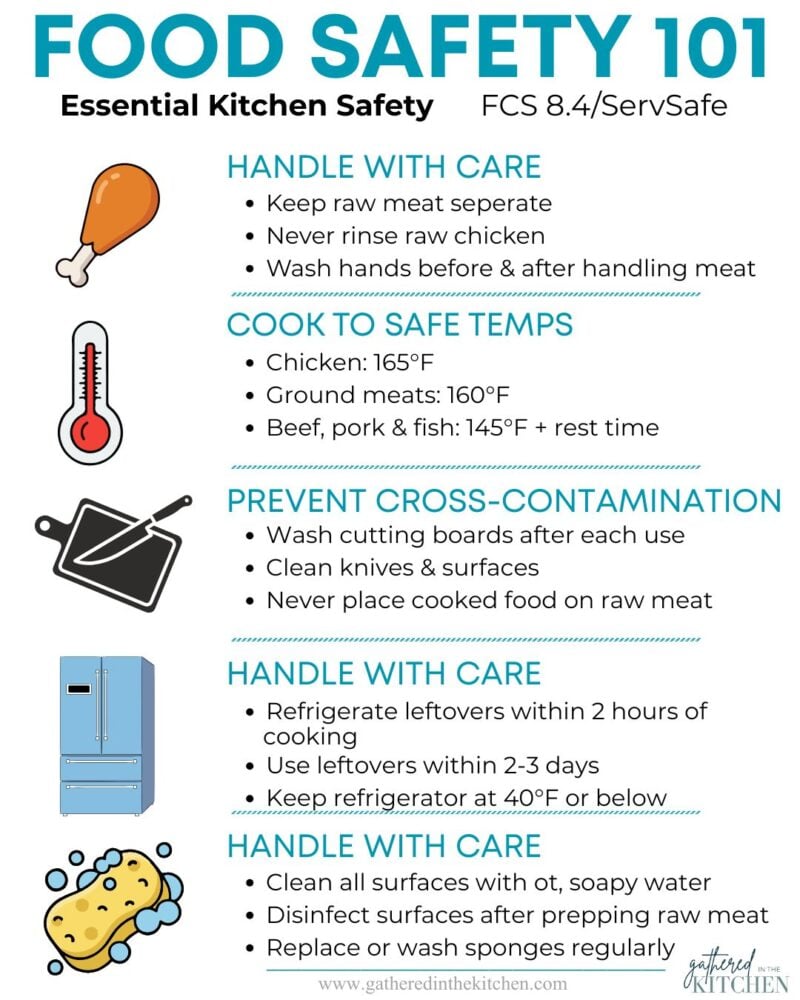
Feel free to pin the graphic below or print it for your fridge — it’s a great everyday reminder!


Stephanie—home cook, DIY addict, seasonal decor fanatic, and proud chicken wrangler living in a Victorian house that’s always a project. Whether I’m cooking with garden-fresh ingredients, herding mischievous chickens, or tackling another DIY, I’m here to share the fun (and chaos).